Showing posts with label women in science. Show all posts

Saturday, June 9, 2012

suits not required?

Last December, I blogged a response to quote I had read from Zooey Deschanel, concerning wearing girly things to work versus being taken seriously in the workplace. This response was pretty much just based on my own experience and perception of how I was received in the very male-dominated scientific community.

An article I read earlier this week entitled "Forget the Glass Ceiling, We Have Hemlines to Consider" was very intriguing. Apparently, it has been shown that as a job applicant, females are more well recieved if they dress in a more feminine manner, more along these lines:


rather than something like this: 

which is all just so interesting to me. I just bought my first skirt suit last year, partially because I thought it was the best blend between my love of dresses and the current male-like 'requirements' in my industry. Now I have to ask myself - maybe I'm just playing into the whole stereotype unintentionally? The article does bring up a question - how can we get this female judgement trend to stop? What will it take for men to seriously consider any female candidate, regardless of what she comes in wearing? My qualifications should get me the job, regardless of whether I am in pants and flats or heels and a skirt! I don't see how change can effectively occur if women have to play into the stereotype to get a job, which just reinforces the bias, and the cycle never ends. It is such a tricky line right now for women to walk along. In some ways, this reminds me of what I've read about bloomers coming into fashion for women, but not so extreme. This is just subtle gender biasing that should not occur. I just want to wear something that I feel comfortable in, flatters my body type, expresses my personality, and does not cater to the men in my industry who think women should be weaker and less dominant. Is that too much to ask for? 

Maybe you're reading this and think it is silly that I think so much about what I wear, but it is precisely because I, as a female, am so quickly judged based on my appearance (and interacted with accordingly), that I have to think carefully about the way I dress. Cyclic, ain't it?

Monday, June 4, 2012

women, tech and commercials (kind of part 2)

You probably don't remember, but earlier this year, I blogged a bit about the surprising backlash against a Best Buy commercial that only featured male tech leaders in the phone/app industry. I still don't have a huge issue with the commercial, but somebody in Best Buy's marketing department must have heard because just recently this new commercial started airing:


Thanks Best Buy for not only featuring women, but diverse women in science and technology! Plus, the commercial is doubly awesome because the first woman featured is my fantastic friend and fellow microgravity flyer, Meredith Perry! So great!

Friday, March 30, 2012

blessings abounding

really I should be asleep at this point in the evening. but if I had gone to sleep 10 minutes ago, I wouldn't have seen one of the most exciting emails come in:

I was awarded an NSF Fellowship!!!!!!!!!

After waiting for over 4 months, finally got word that my proposal was reviewed favorably and that I have funding for at least the next three years. I'm still waiting on the other 7-ish fellowship programs to get back to me, but it is incredibly relieving to have a secure funding option. And it might solve my summer funding issues - apparently I can start receiving the grant money as early as June 1st. Need to discuss this with my advisor, of course :)

Getting this is so affirming in many aspects - that I can write a decent proposal, that my science is innovative, and that people other than me,  my advisor and my friends believe that investing in me as a scientist is a positive thing. (I'll be honest though, no scholarship/fellowship notification has yet to top my NASA MUST email. That was seriously one of the best moments ever. Could be that I'm just tired now and all my excitement chemicals are suppressed....)

I'm still waiting expectantly to hear back from some solar/tech companies I applied to for the summer (the one Seattle company turned me down), but this NSF news is just so wonderful.

because it's 1am and I don't have any 'excited face' pictures on my computer (though this might suffice), please enjoy this adorable kitty:


{usually my eyes get all squinty when I have a large smile....}

MORE exiting news from the past week - I was accepted into the UW Nanotechnology PhD program! Which, yes, means that I'll kind of have two doctorates at the end of the day :) I'll be honest - the program seems more like a 'certification' or 'specialization' than a whole second PhD - but who am I to complain?). My full degree will be a PhD in Materials Science and Engineering and Nanotechnology. Isn't that a mouthful?!

oh yes, and I passed my solar cells class with a way higher-than-expected grade! 
and my lab is basically now set up! (yay for lab work!)
and I get to go to a climbing comp saturday! 

wow wow wow. so blessed. 

Sunday, March 18, 2012

dreaming

This video has been floating around the internet lately, but I thought I'd post it here for all my friends who might not generally watch NASA/space-inspired videos. yes, I know that if you're in my g+ "NASA Friends" circle, you've probably already seen it :) (also, this is so I can remember it later...)


watch is as you prepare your taxes. watch it with anyone you know who is thinking about being a scientist. who wouldn't be inspired by that incredible imagery? even though my goal in life is to build solar cells for people here on earth, I still dream of exploring space.

the only thing missing in the video? more women in science. there was one, did you see her in the orange flight suit? 

Wednesday, February 8, 2012

women, tech, and the superbowl

In the post-superbowl commercial analysis, there are a few terribly inappropriate commercials are on everyone's radar because their content so explicitly objectified women in a way that needs to stop happening. However, while pursuing the twitter hashtag #notbuyingit, started by the women of Miss Representation (a film that I recommend watching) I was caught off guard by the dislike of the best buy mobile commercial:


Maybe it was just because I was watching the commercials in a room full of women who had met one of the people featured (and were very excited about it every time, understandably so :)  - it was the guy who turned text in to voice) or because I'm so used to the male-dominated tech field, that I didn't have an issue with the fact that every single developer featured was a male. Some people thought that best buy was sending the message that while men can make apps, women can only sell them. While that conclusion can be drawn from the ad, I, somewhat surprisingly, don't have a large issue with the ad, because it is such a male-dominated industry right now and men have created great technological advances. (side note, I hope that guys don't feel like their tech advances are being completely discounted because they are men and not women, in this whole conversation about women in science/tech - that is not my intention. I just want to see women given more opportunities and told that they can succeed in a currently male-dominated industry. It can be quite intimidating to be the only women in a room if you don't have support and encouragement!)

An article on a site called Jezebel pulled together a list of females in the tech industry that the author felt best buy could have included in their ad. Click the link, read the list of women. Quite honestly, Amanda Wixted, the creator of Farmville, is the only women I feel would be well-know enough by the superbowl-watching crowd to merit real consideration by the marketing team at best buy. Would you recognize Emily Chang, the woman who created a company who designs user interfaces - recognizing her product in the 3 seconds she would have been on the screen? I can't even remember the faces of the men who made Words with Friends, but I connected with the ad because I saw the image of the app on the phone screens. Maybe it's because I've been on the flip side as well, as a member of the commercial-producing crew (my uncle makes commercials and I've worked for him in the past) that I understand why the men who appeared were featured. Do any of you know about the women Women are still making great strides in the tech industry, but I'm not ready to quit shopping best buy because of this commercial. Women were not objectified and we got to see some of the faces behind some of the most well-known and useful mobile technology. And anyways, there were both men and women in the mix at the end, I'm just glad the used a female to do the talking, as it easily could have been a male 'manager' - which is the role I mentally put the woman in because she was the spokesperson. (second side note - check out the racial diversity in that group of best buy sales people and note that not all of the male developers are white males.)

I'm curious, though, what my other feminist-minded friends thought of the commercial, did your radar pick up on the all-male developers vs women salesperson when you first saw it?

Sunday, January 15, 2012

booth babes

ommph. I would audibly express my frustration, but my roommate is trying to learn how to nap (I know, who doesn't know how to nap?!) so I'm going to write about it. I'm also putting off finishing homework, but that's nothing new.

you all know how I struggle with appropriate dressing in a male-dominated science field, but there is absolutely no reason booth babes should exist.

'Booth babes' stir controversy at 2012 CES
(for some reason, BBC won't let me have an embed code, but you should click on the link and watch the video, it's not too long)

Booth babes are insulting to women working in the tech field and only encourage gender stereotyping and inappropriate behavior. Regardless of if a women voluntarily agreed to work as a booth babe, she should not be subject to inappropriate comments and behavior from men, as seen in the BBC clip. (I also hate the way women are dressed in most video games and sci-fi books, but that's for another post.) I also finding it insulting to attendees to just assume that they would not be interested in a product if they don't have a scantily-clad model holding it. The problem only doubles when models are hired and not expected to know anything about the product. A company engages an attendee by objectifying a woman and then can't the sell the product because the rep doesn't know what she is handling - awesome marking strategy PR department (a marketing team probably all filled with men, but I won't put it past a woman to set something up at a male-heavy expo) Someone attending something like CES is there specifically to find out about new products, so I really don't see the point of hiring booth babes to introduce new products. And to the gal in the red shirt who though what they were wearing was fine because they weren't practically naked and laying across the hood of a car - if the clothing isn't appropriate for the tech workplace, it shouldn't show up at a tech conference.

Violet Blue, over at ZDNet has a humorous and pointed discussion about what it would be like if booth babes were male. also awful was the number of men taking pictures of the women without a product in her hands (link is from another gaming conference where apparently booth babes were supposed to be absent. it's quite funny, actually). If you're a guy who would go ask about a product because of the women holding it, not because of the actual product itself, I never want to work with you. That behavior quickly translates into an uncomfortable atmosphere in the workplace and I want nothing to do with it.

I also found the model's comments on women not being interested in technology telling about what she values and how the low visibility of women in tech makes entering the filed intimidating. I don't believe girls will see science and technology as a viable career to pursue until we get more women doing high-profile awesome things in a non-exploiting manner. Which is tricky, because minds, values, and attitudes in the industry have to change now before more women will join. I'm not sure what exactly to do to help this change happen, but I think that starting by mentoring girls and showing them how they can excel in those fields and supporting women like my friend Meredith, who is blazing trails through the tech industry.

for more discussion about booth babes, there are some other articles that have popped up on the internet:
another ZDNet one
one from The Guardian - apparently women were dancing in thongs at CES....really?!!!
from The Atlantic Wire
CNET (via huffington post) posted an except of a Women in Tech Panel - and look how awesomely they all were dressed!!!

and a whole ream of photos of booth babes - can you tell what they are marketing?
oh wait - there's more
and look! some gadgets, but don't forget the booth babes.

I'm done ranting now, but if you read all the way through this, I'd be interested in hearing how you would/do respond to the idea or presence of booth babes at a conference.

Also, no relevant pictures in this post, because the only related pictures would be of scarcely clad women, and I don't want that on my blog. But I can give you a cute kitten picture!


I would totally check out a product if a marketing department used kittens to sell it.....

Saturday, January 14, 2012

{young} women in science

so encouraged today - learned that the winners of Google's new Science Fair were all female.


slightly discouraged at the rate of rejection from the people the girls reached out to for assistance, but I'm not sure if the rejections were based on their age (13-18), type of experiments, or because they are female, so I won't judge the rejectors too harshly.

and nope, this contest was not targeted towards women/minorities, it just happend that these intelligent, curious and persistent women found the mentorship, support, and encouragement to continue working towards doing great and innovative science.

Monday, December 26, 2011

Right Stuff, Wrong Sex

Recently, I finished reading Right Stuff, Wrong Sex by Margaret Weitekamp. With the subtitle of ‘America’s First Women in Space Program,’ I initially thought that the text would center around the women who were tested as potential astronauts. However, this book proved to discuss the background and development of Dr. William Randolph "Randy" Lovelace’s Women in Space testing program, the political backlash against the program, and the general cultural beliefs that stopped women from being a part of the Mercury and Apollo programs. *Lovelace’s facility in Albuquerque became NASA’s medical center, mainly because he was a leader in aviation medicine and working on developing a space medicine research program.


Remember that the early space program began before the women’s lib movement, so any consideration of a female for an astronaut could be assumed to be tricky. What was surprising to learn was how under-the-table Lovelace’s program had to operate because of the hostility he faced in the political sphere. I was shocked to find out that President Johnson (Johnson Space Center in Houston, TX is named after him) was very much against female astronauts. A scribbled note from him in response to an inquiry about female candidates from NASA’s Administrator is one of the only bits of a paper trail recording the hostility of those in Washington against the women. Instead of his name, he signed 'Let's end this now!' in the space at the end of his note.  

Overall, 25 female pilots were tested by Lovelace and 13 passed the week-long physical examination. Only three women were able to go on to further testing, the not-so-official program was ‘officially’ cancelled only 5 days before the rest of the women were scheduled to fly to Pensacola, FL for psychological testing. This was actually a most interesting test of how potential astronauts handled total isolation: they floated in a pool, in a darkened room for as long as the possibly could. Both the air and the water temperature were matched exactly to the women’s body temperature, so apparently they didn’t even feel the water when they splashed it!


I found myself frequently frustrated with the lack of support for the women. The cultural standards and expectations for women could be used against them – one women was in a congressional hearing testifying for female astronaut candidates, was photographed with her heels off under the table and that breech in expected etiquette was used to discredit her whole testimony. The women found themselves with unsupportive employers, as many lost their jobs when they left to be tested. Even the man running the physical testing, Lovelace, did not envision these women as astronauts in the same sense as male candidates. He expected that once space had been initially ‘colonized,’ women would be needed as lab technicians, secretaries, and space ‘homemakers.’ Ugh. Even the most forward-thinking men of the time couldn’t get past the traditional gender roles that permeated the American culture.


The tested women were all incredible pilots, most with numerous flying records to their name and countless hours of flying time. However, one of NASA’s requirements kept women out of the pilot’s seat on any space-based aircraft for years to come: they had to have hours flying a jet aircraft. At that point in time, only the military flew jets and the military did not allow women to fly anything after the short-lived WASP program. So, regardless of how much they fought to become candidates, the women could always be pushed out because there was absolutely no way they could get the time they needed in a jet. Some women even considered trying to privately fund the purchase and flying of a jet, but that didn’t go anywhere in the end.

I was just slightly overwhelmed with the walls and roadblocks that these women faced in their campaign to fly to space. It made me more than thankful to live in 2011, when even though I still feel the cultural constraints of being a women in science, I have supporters. NASA so destroyed the hopes of accomplished women for becoming astronauts that they had to hire Nichelle Nichols, Uhura from Star Trek, to recruit females and other minorities to the shuttle astronaut core. Even then, as Weitekamp points out in the epilogue, there existed a two-track system for the astronaut core: one for PhDs and MDs, called ‘mission specialists,’ and one for pilots. There were a number of women who flew on the shuttles before a female was actually selected to command and pilot a shuttle mission.


FLATs (First Lady Astronaut Trainees) at one of Eileen Collins' launches on the space shuttle. Collins was the first woman to pilot the shuttle. 

Really, this was a most interesting book and fascinating read. I’m returning it to the library soon, so you should pick it up and read it. While I was initially interested in because it was about early female astronaut candidates, it really is a book anyone interested in gender equality or even history of aviation medicine should read. It spun out of the author’s thesis and is a well written book. Not too long either, I finished it in just 3 days by the pool :)

Tuesday, December 13, 2011

suits required.


“Here’s the thing about being a girlie girl. I think there was a generation before us that felt like they needed to act like men to be taken seriously, like they had to use their sexuality to take control of people. I don’t judge people for that. But I don’t want to take all my clothes off and use myself as an object. It’s part of the machine and I don’t think that necessarily pushes us forward as women. I think you can still be girlie and maintain your power. The fact that you associate being girlie with being non-threatening, that is … I mean, I can’t think of more blatant example of playing into exactly the thing that we’re trying to fight against. I can’t be girlie? Why do I need to be defined aesthetically by someone else’s perceptions of what makes me seem like someone who should be taken seriously? I’m going to wear whatever I want to wear, because I’m expressing myself, and I deserve that right. And I like the way that looks. You’re not demeaning yourself by acting girlie. I think the fact that people are associating being girlie with weakness, that needs to be examined. Not me dressing girlie. I don’t think that undermines my power at all.
“I’m not doing it to pander to people. I just always knew what I liked versus what I don’t like. I never liked things with too many zippers or spikes and stuff. That weirds me out. I like things that are pretty. And I think it’s great to be pretty. I like being feminine. I think it’s good to be feminine. We don’t need to look like men or dress like men or talk like men to be powerful. We can be powerful in our own way, our own feminine way.”  - Zooey Deschanel (source)
------
I like this; I like it a bunch. I don't however, necessarily agree with the implication that our generation of women doesn't still feel pressured to dress and act like men to be taken seriously. After watching the film Miss Representation, the one thing I left with was how all the non-artists featured were wearing menswear-esque suits. 
Nancy Pelosi, Condoleezza Rice, Katie Couric and the other women who names I can't remember, but who worked in the law or politics fields, were all wearing suits. Women in the art and film industries were not in suits. They were still dressed well, but they were not in a tailored suit with square lapels and shoulder pads. Artists have always been able to get away with wearing non 'standard' clothing. Zooey Deschanel is an artist. 
In which of the following outfits would you take me more seriously as a scientist? (ignoring the setting of the pictures) 


I think, in my case, dressing girly probably undermines how seriously people consider my science and how much respect I command in my male-dominated field, regardless of how much we say we don't judge people based on their appearance and seek gender equality. Which is just too bad, because I love to wear dresses and skirts.

Wednesday, November 23, 2011

women in science.

As I've mentioned before, there are very few women in my MSE department here at the UW, which just follows the general trend in the STEM (science, technology, engineering and mathematics) fields.

After reading The Disappearing Spoon, (a really good book - I highly recommend it!) I was slightly encouraged about the current status of females in STEM - in the recent past, women did all the work and their male counterparts got all the credit. (This is not a story confined to science, I'm sure.) At least, now women can author papers and are recognized for their work!

However, from all the lecture's I've attended, from the books that I have read, and from my own experiences, I still don't see women as a whole fully supported in STEM. (disclaimer - even though I'm the only women in my research group, I don't perceive any difference in the way I am supported by my advisor.) I don't know what it is going to take to change the fundamental cultural belief that women aren't as capable in the sciences as their male counterparts, just as I don't know what needs to happen to change the perception of scientists as a whole. (I do have some stories to share about my experiences thus far as a female scientist, but I'll save those for another post, this one is already kind of long....) I may be the lone voice here, but sometimes I get frustrated that scientists are presented so one-dimensionally as people who stereotypically lack social skills and don't dress well. I've already ranted about this on my other blog, so I won't repeat it here, but if you're interested, you can read it here.

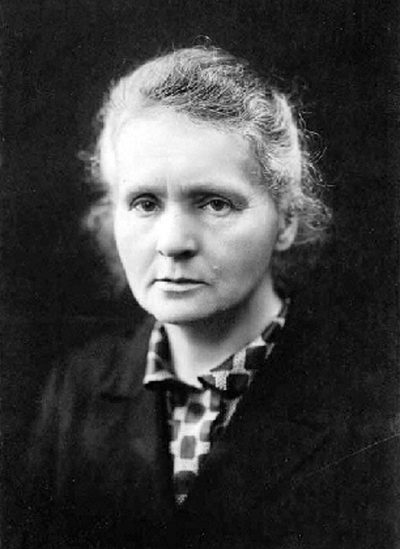
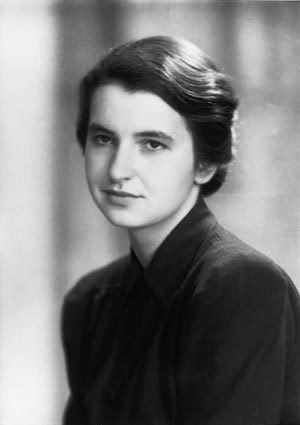
Someday, I'd like to create a documentary about women in science. I'm sure it's probably been done before, but I'd like to create an exciting, yet holistic, picture of female scientists, not just reproducing the stereotypical perceptions of women in STEM. Recently, I saw a clip for First Robotics filled with celebrities encouraging students to participate in the robotics competition and to pursue science/engineering/math as a career. There was only one female - Miley Cyrus. (I don't have anything against her, but I feel like the editor didn't cut her sections well.) Even the famous scientists they highlighted through the clip were all male. Sure, Albert Einstein was a genius and, arguably, modern science would not be where it is today without his work, but  without the female scientists throughout history, we wouldn't know the structure of DNA or fundamentals of radiation.

{Rosalind Franklin - fundamental DNA structure work via x-ray crystallography}
{Marie Currie - fundamental knowledge of how radiation occurs}
(though I'm sure that if you're reading my blog, you already know about these women :) )

more recently recognized women: 


{Françoise Barré-Sinoussi - fundamental HIV research; Nobel prize 2008}
{Barbara Liskov - (first female US PhD in Computer Science; object-orientated programing}

I did find this video - but let's be real, what was more exciting/inspiring: the video on women in science or the one  with celebs for FIRST? And that was the best looking video I quickly found on YouTube....

So. What can I do now? How can we get more women in STEM? I'm still not sure, but I'm going to do my best to encourage and support every female I work with. I'm headed to NM in a week and a half to give a presentation to underrepresented students in STEM - hopefully my story can encourage them to continue STEM careers.

I've also picked up Right Stuff, Wrong Sex recently from the library, all about the first female astronaut candidate. I can't read it until break, but I'm looking forward to reading it. I'm also on the hunt for other books/media on women in science - so if you have any suggestions, let me know!

(on an slightly unrelated note - I changed my blog theme - what do you think?)