Saturday, December 3, 2011

{diversity in science}

This Sunday, I'm flying out to Albuquerque, NM (good thing I don't actually live there, I would never ever spell that town correctly without spell checker....) to give a 'how to apply to graduate school' presentation to underrepresented STEM students at New Mexico Sate University. I gave a similar talk to the NASA MUST program students at our symposium this past summer and was asked by my program coordinators to give a similar talk at NMSU. (If you or someone you know is applying for grad school, you can check out my handout here - any feedback is greatly appreciated :) )

Preparing for this presentation has made me notice the diversity present in my department and in my group. Compared to what I saw at my undergraduate university, the UW is seems much more diverse. SPU felt much less diverse, though apparently we're up to ~25 % minority students in the newest incoming class. My little group of 3 BS Chem students were all Caucasian and all our profs were Caucasian (and only one was female).

Now, in my MSE department, I'm surrounded by people of all backgrounds, nationalities, cultures, etc. In my windowless office, there are five of us - me, one kind of really awkward caucasian guy, two asian females and one asian male (I'm not sure where exactly they are from). In my group, where my PI is from India, there are three Chinese guys, one Iranian guy, one Indian guy, and one caucasian guy (well, two if you could the senior undergrad who just joined our group this week). Though, I must say, there is still a large number of caucasian males.

In a strange way, the diversity present in my department at the UW is divisive. I don't see much reconciliation between people of different backgrounds, even with the commonality of science. (But, maybe I shouldn't expect much reconciliation at all apart from Christ?)

though it wasn't consciously intentional, the other grad students I have begun to become better friends with are all caucasian. the large number of chinese students (I think - could be another asian nationality, I'm really bad at being able to tell them apart.) typically tend to group together, speak their native language, and not mix with the other grad students. Even in our lab group I've noticed this, even though it could be partially due to the fact that all the Chinese students are working on closely related projects.

I've tried to imagine how I would interact with other students if I was the visiting student and didn't speak the national language. I'm sure that I would probably feel most comfortable with other American students, but I should hope that I would not exclusively interact with them. I suspect that going to Sweden one of these summers will be a bit different experience than if I were to go to an Asian country - even though their national language is not english, Swedes are pretty white :)

Should we be satisfied with the current drive for 'just' increasing the number of diverse students in our schools and communities? how do we interact with each other well, learning from our differences, celebrating our respective cultures and build collaborations? I want to become a more global scientist, and right now, to me that means learning work with people of all backgrounds and cultures. So far, I'm afraid I've not been too successful, and I'm not sure how to change that.

but for now, I should go back to studying for my one in-class final next week. it's all about symmetry. I can break down the pretty Hungarian needlework below to a variety of symmetry elements....


Thursday, December 1, 2011

10000 Hours

Recently, I read Malcolm Gladwell's Outliers. Since I don't have the most fantastic memory in the world, I don't actually remember it in too detail (and let's be honest, I've shoved a whole boatload of new grad school related information into my brain since I finished it....) but it was an interesting read. If you haven't read it, it revolved around analyzing the context of successful people in a variety of arenas, debunking our favorite American myth of the self-made man. I'm not sure I agree with everything he generalized, but it was fascinating to learn that Jan-March are the best months for a hockey player to born in and that June - Aug are the best for people who want to play baseball. Of course, your cultural context can also indicate how successful you can become, but it was interesting to see that idea applied in the case of Korean airline crashes. Before not-too-long-ago, your chances of crashing were drastically higher if your pilots were Korean, due to the hierarchical culture and communication issues it created.

{If you want a taste of what the book covers, you should head over to RadioLab and listen to their podcast interview with Gladwell covering some of this book (but it could also be this podcast, I can't remember exactly). It's the reason I picked it up. Plus, RadioLab is just plain awesome!}

Long story short, he also subscribes to the 10000 hour theory - that the greatest people are only great at what they do because they put in the physical work hours, inferring that anyone can be good at anything, as long as the put in the time (the benchmark being ~10,000 hours). I'm not sure that's entirely true, but lots of good/correct practice always seems to pay off in the long run.

(I also have related thoughts about the kind of less positive side of this idea, that it's really difficult to get out of the conditions you were born into, but they aren't formulated enough at this point in time to merit more words than this side note.)

Why bring this up at 1:30 in the morning? Because I needed a brain break. And because, right now, I'm hoping this time I'm putting into learning about photovoltaics, nanomaterials, and writing this report for my advisor counts towards my 10,000 hours.

Outliers  is one of the few books I actually have with me in Seattle, so let me know if anyone wants to borrow it for some fun reading!

And I always think a good blog post needs a picture, so here's one of my favorite Hubble pictures :)


Wednesday, November 30, 2011

{art + science}

Probably most of the people who read this blog know that I love when art, design, and science come together - the results are both both beautiful and technically interesting. While I was aware of national SEM image competitions, recently I came across the 'Art of Science' competition from Princeton.

Would you believe this image represents the reversals of the Earth's magnetic field?


Or that this image models population dynamics?


This image captures some of the dynamics of a surfactant (soap) at a thin-film/silicon wafer interface: 


my new grad school goal: find out if the UW does anything like this and if not, make it happen. We even have an art museum on campus!

{I linked some of them above, but I've posted a bunch about art/fashion + science/tech on my other blog}

Monday, November 28, 2011

--life interruption--

near midnight, I learned a few things:
(and not from my MSE textbooks)

when in a washington hospital, code grey is a call for help with a 'combative' person.
apparently there was one in room 9. 

it becomes code 'silver' when there is a weapon involved. fortunately we have not heard that one called yet. 

and most interestingly, codes are frequently not standardized across a state, let alone across the country. This seems to me like something somebody in the government should have addressed by now.....
they have been standardized in WA and OR - thanks, google. 

don't worry, I'm not being seen at the ER, I just drove a friend here. 

I'm probably the only person this hospital has seen recently working on homework while waiting for someone to be seen. I really should be working on formatting my references for my paper due next Monday, but it's kind of hard to focus...

tonight, I'm thankful that two of my dearest friends are nurses.


love you both, thanks for your loving service at Children's and in Bihar!

Wednesday, November 23, 2011

women in science.

As I've mentioned before, there are very few women in my MSE department here at the UW, which just follows the general trend in the STEM (science, technology, engineering and mathematics) fields.

After reading The Disappearing Spoon, (a really good book - I highly recommend it!) I was slightly encouraged about the current status of females in STEM - in the recent past, women did all the work and their male counterparts got all the credit. (This is not a story confined to science, I'm sure.) At least, now women can author papers and are recognized for their work!

However, from all the lecture's I've attended, from the books that I have read, and from my own experiences, I still don't see women as a whole fully supported in STEM. (disclaimer - even though I'm the only women in my research group, I don't perceive any difference in the way I am supported by my advisor.) I don't know what it is going to take to change the fundamental cultural belief that women aren't as capable in the sciences as their male counterparts, just as I don't know what needs to happen to change the perception of scientists as a whole. (I do have some stories to share about my experiences thus far as a female scientist, but I'll save those for another post, this one is already kind of long....) I may be the lone voice here, but sometimes I get frustrated that scientists are presented so one-dimensionally as people who stereotypically lack social skills and don't dress well. I've already ranted about this on my other blog, so I won't repeat it here, but if you're interested, you can read it here.

Someday, I'd like to create a documentary about women in science. I'm sure it's probably been done before, but I'd like to create an exciting, yet holistic, picture of female scientists, not just reproducing the stereotypical perceptions of women in STEM. Recently, I saw a clip for First Robotics filled with celebrities encouraging students to participate in the robotics competition and to pursue science/engineering/math as a career. There was only one female - Miley Cyrus. (I don't have anything against her, but I feel like the editor didn't cut her sections well.) Even the famous scientists they highlighted through the clip were all male. Sure, Albert Einstein was a genius and, arguably, modern science would not be where it is today without his work, but  without the female scientists throughout history, we wouldn't know the structure of DNA or fundamentals of radiation.

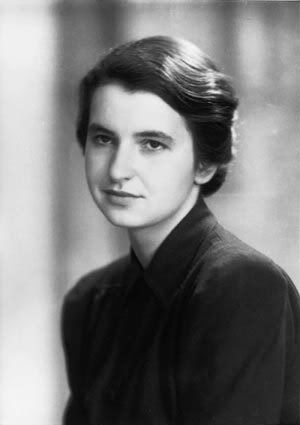
{Rosalind Franklin - fundamental DNA structure work via x-ray crystallography}
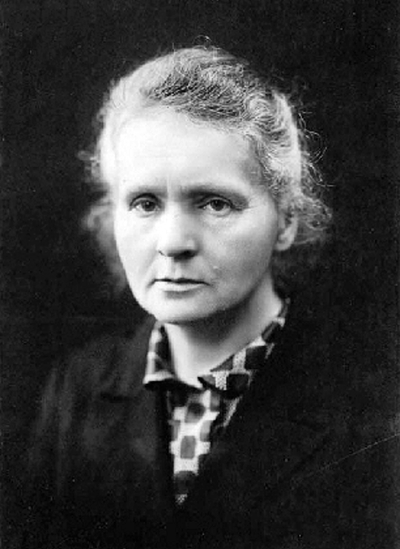
{Marie Currie - fundamental knowledge of how radiation occurs}
(though I'm sure that if you're reading my blog, you already know about these women :) )

more recently recognized women: 


{Françoise Barré-Sinoussi - fundamental HIV research; Nobel prize 2008}
{Barbara Liskov - (first female US PhD in Computer Science; object-orientated programing}

I did find this video - but let's be real, what was more exciting/inspiring: the video on women in science or the one  with celebs for FIRST? And that was the best looking video I quickly found on YouTube....

So. What can I do now? How can we get more women in STEM? I'm still not sure, but I'm going to do my best to encourage and support every female I work with. I'm headed to NM in a week and a half to give a presentation to underrepresented students in STEM - hopefully my story can encourage them to continue STEM careers.

I've also picked up Right Stuff, Wrong Sex recently from the library, all about the first female astronaut candidate. I can't read it until break, but I'm looking forward to reading it. I'm also on the hunt for other books/media on women in science - so if you have any suggestions, let me know!

(on an slightly unrelated note - I changed my blog theme - what do you think?)

Saturday, November 19, 2011

engineering school

according to my good friend Hannah, engineers become engineers to escape writing lots of papers.

apparently, this is not true in my program this quarter. I'm sitting here, in the Suzzallo library, staring down three intense reports that have to be done before the end of the quarter.

Thanks to the SPU/liberal arts/UScholars, I don't mind writing, but I'm not enjoying this paper. I am digging through literature that is older than my grandparents and reading 'reports' that really should be books. (I mean, when has anyone published a 86 page literature paper??!)

I did come across this gem in a footnote about the marcasite form of FeS2:

"I  was prepared  to  have  quantitative  analyses made,  but  our  best professional
analysts  (including  Miss  Mary  G.  Keyes  and  the  new laboratory  for  rock  ahalyses
in  charge  of  Dr.  Grout  of  the  University  of  Minnesota)  declined  to  make  them,
pleading  inadequate  equipment  for  sulfide  analyses. Where  can one obtain  reliable
sulfide analyses? My  own  experience with  the  routine  commercial  analyst  is that  he
cannot  be  relied  upon  for  scientific  work."

I'm also enjoying the fact that this paper is all about politely telling the world that the previous analysis of marcasite by Huggins is wrong and he just got lucky that his mis-labeled axes (is it bad that I had to look up the plural of 'axis'?) actually kind of worked.....

back to the paper.

(somedays I'm thankful we don't see sun everyday in Seattle. too bad today is not one of those days.)

Monday, November 14, 2011

I wish I was an Astronaut

just to see this:


what an incredible view. 

It's easy for me to forget the big picture when I've been in my windowless office for days, but then I find something like this video. wow. did you see the Aurora Borealis?? and the lighting storms?? Even though I live in a big city, one of millions of people, the night images of the Earth, with all the bright city spots, reminds me just how big the world actually is - almost 7 billion people! And then I  remember how small our little blue planet actually is in the grand scheme of the universe.

anyways. the likelihood of actually seeing the earth from space is slim, either on the ISS or on another space-bound mission. I'd be content to see the Aurora Borealis - it's going on my list of things to do when I spend a summer researching in Sweden!


oh. apparently NASA is opening Astronaut applications today......

(I met one of the astronauts up there! so good to see him still in the program!)
(and the woman speaking about the hiring process, Dr. Janet Kavandi, graduated from the UW!)